
Copyright Registration in U.S. and Copyright Registration in China
Copyright Registration in U.S. and Copyright Registration in China

How to define Copyright? Copyright (or author’s right) is a legal term used to describe the rights that creators have over their literary and artistic works. Works covered by copyright include books, music, paintings, sculptures, and films, as well as computer programs, databases, advertisements, maps, and technical drawings., | 
Who Can Register Copyright? In most countries, under the Berne Convention, copyright protection is granted automatically without the need for registration or other formalities. Nevertheless, many countries have established voluntary copyright registration systems. Such systems help resolve ownership or authorship disputes, and facilitate financial transactions, sales, as well as the licensing and/or transfer of rights. |

There Are Two Types of Copyright Rights: 1. Economic Rights – These allow rights holders to earn financial rewards from the use of their works by others. 2. Moral Rights – These protect the non-economic interests of the author.
Most copyright laws provide that rights holders have the authority to authorize or prohibit certain uses of their works, or in some cases, to receive remuneration for such uses (for example, through collective management). Owners of economic rights in works may prohibit or authorize: • Reproduction in various forms, such as printed publications or sound recordings; • Public performances, such as theatrical plays or musical works; • Fixation, for example on CDs or DVDs; • Broadcasting by radio, cable, or satellite; • Translation into other languages; • Adaptation, such as turning a novel into a film script.
Examples of widely recognized moral rights include the right to claim authorship of a work and the right to object to modifications that could harm the creator’s reputation. | 
What Can Be Protected by Copyright? Copyright laws generally do not provide an exhaustive list of protected works. However, broadly speaking, works commonly protected worldwide include: • Literary works, such as novels, poems, plays, reference books, and newspaper articles; • Computer programs and databases; • Films, musical works, and choreographies; • Artistic works, such as paintings, drawings, photographs, and sculptures; • Architectural works; and advertisements, maps, and technical drawings. Copyright protection applies only to the expression of ideas, not to ideas themselves, procedures, methods of operation, or mathematical concepts. Objects such as titles, slogans, or logos may or may not be protected by copyright, depending on whether they contain sufficient originality. |
Copyright Registration in U.S. Fees |
Copyright Registration in China Fees |


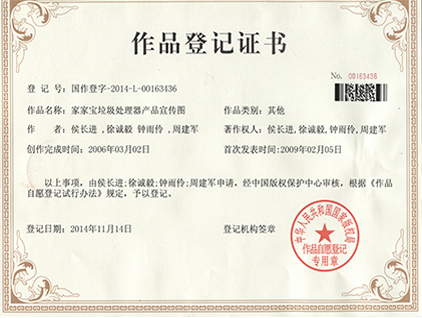
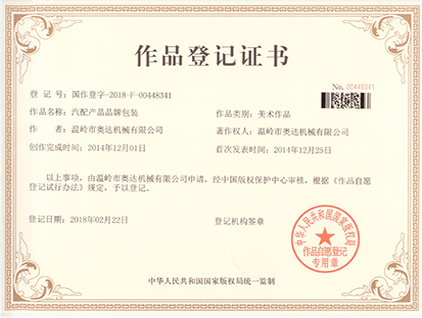
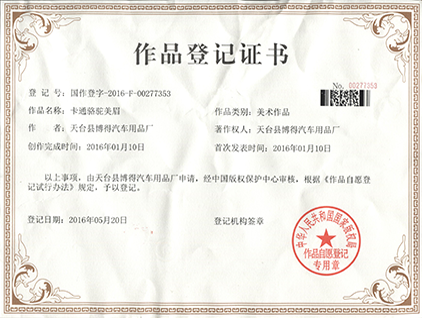
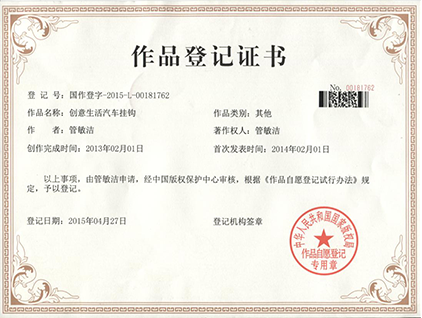
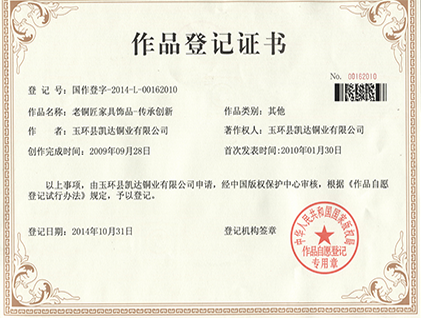
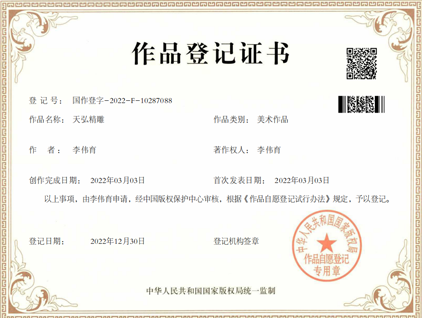
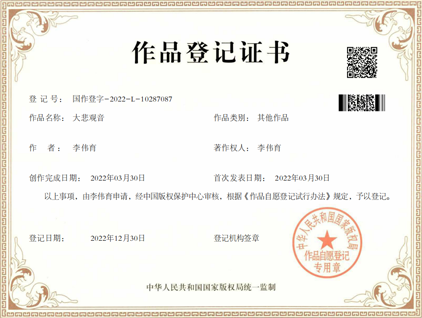
Part of the copyright certificate display to help customers apply
Part of the copyright certificate display to help customers apply
U.S. Headquarters: Renhe International Group Co., Ltd. Address: Room 210, 9602 Las Tunas Drive, Temple City, California, USA, 91780 Website: http://www.renheip.com Email:rhipusa@gmail.com Email:office@renheip.com Email:sales@renheip.com Email:founder@renheip.com Phone: (+1) 818-434-1355 626-566-7070 | Zhejiang Office: Taizhou Renhe Trademark Agency Co., Ltd. Address: B311, Floor 3, No. 258, Donghai Avenue, Haihong Street, Taizhou Bay New District, Taizhou, Zhejiang, China Phone: +86-576-88206751 88201082 13336766118 Emails:info@tzrh.net Emails:sales@tzrh.net Emails:rhipsunny@tzrh.net | Addresses of Offices in China: Beijing Office Room 316, Building 8, Yard 9, Changxing East Street, Changyang Town, Fangshan District, Beijing Contact: Mr. Wang Mobile: 13386552008 Email: Sales@renheip.com Shanghai Office Room 1119, No. 19, Lane 38, Caoli Road, Fengjing Town, Jinshan District, Shanghai Contact: Ms. Li Mobile: 18121016173 Email: Sales@renheip.com Room 1101, Building C, Academician Innovation & Research Center, Applied Science City, Linyi City, Shandong Province Contact: Mr. Zhu Mobile: 18221057827 Email: Sales@renheip.com Shaanxi (Xi’an) Office Room 1501, Unit 1, Building C, Zhongfei Diamond Constellation, No. 127 Changle Middle Road, Xincheng District, Xi’an City, Shaanxi Province Contact: Mr. Li Mobile: 13022899618 Email: Sales@renheip.com |




| Copyright © RENHE INTERNATIONAL GROUP INC, All Rights Reserved |